What to Research Before Buying or Building on Land (We Wish We Knew This Sooner)
Images are for illustrative purposes only and may not reflect actual property conditions or requirements.
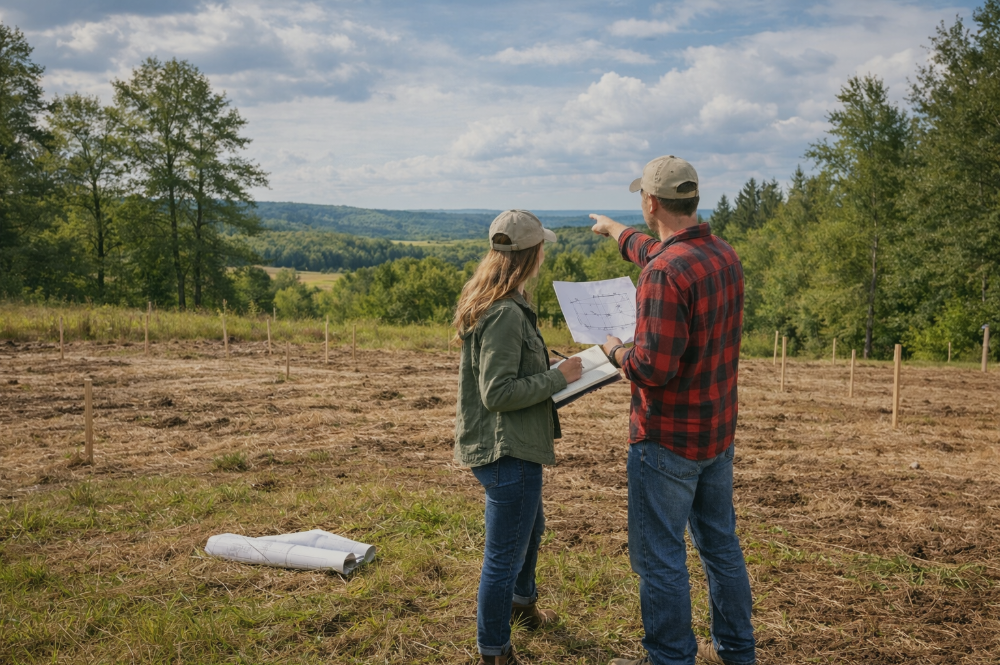
Before we started planning our build, there were a lot of things we didn’t even know we were supposed to check.
And looking back… some of them feel obvious now.
But when you’re first looking at land, it’s easy to focus on the dream—the views, the space, the possibilities—and miss the details that actually determine what you can do with it.
The truth is, not all land is as usable as it looks.
And a few overlooked details can completely change your plans.
We’re still in the process of building our homestead, so we’re not speaking from years of experience—but everything below is based on the research we’ve done so far and what we wish we had fully understood earlier, before we spent days planning out our home build.
Why This Matters More Than You Think
In our case, our land was gifted—but whether it’s gifted, inherited, or something you’re considering buying, having land in hand feels like freedom.
But in reality, every property comes with a set of rules, limitations, and hidden factors that don’t show up in listing photos.
Two pieces of land can look almost identical—and allow completely different things.
That’s why doing your research upfront is one of the most important steps in the entire process.
And a big part of that research is understanding why those rules exist in the first place.
Why Are There So Many Rules Around Land?
At this point, if you didn’t already know all of this, you might be thinking:
“If it’s my land… shouldn’t I be able to do whatever I want with it?”
I’ll be honest—that was a frustrating thought I had too.
When you’re looking at wide open land, the possibilities seem endless. So realizing there are rules, restrictions, and permits attached to it can feel a little backwards at first.
But once I started understanding why those rules exist, it actually made a lot more sense.
For example, if a property is zoned as agricultural, those rules are there to protect farmland and keep it usable for that purpose long term. They’re not trying to limit you—they’re trying to prevent that land from slowly turning into scattered developments that make farming harder or impossible.
And honestly, that clicked for me.
There are already plenty of housing developments and high-rise buildings in more populated areas. These rural spaces exist for a reason, and the rules help preserve that.
The same idea applies to a lot of the other restrictions too:
Setbacks help prevent structures from being built too close together or too close to roads
Septic and soil requirements protect groundwater and prevent contamination
Zoning laws help keep areas consistent so you don’t end up with something completely out of place next to you
That doesn’t mean every rule will feel convenient—but most of them are there for a reason.
And once you start looking at it that way, it shifts from:
“Why are they limiting me?”
to:
“What is this land actually designed to support?”
That mindset alone makes the whole process a lot easier to navigate.
Here are the main things we’ve learned are worth looking into before buying or building on land:
Things to Research Before Buying or Building on Land
1. Zoning Restrictions
Zoning is one of those things that sounds boring… until it completely limits what you can do with your land.
Every property falls under a zoning classification set by the local township or county. That classification determines how the land can be used—whether that’s residential, agricultural, mixed-use, or something else.
We’ll break zoning down more in a future post, but for example, a property might look perfect for a homestead—yet if it’s zoned in a way that restricts livestock or certain structures, it could limit your plans more than you expect.
What to check:
The exact zoning classification of the property
Whether animals, gardens, or outbuildings are allowed
Any restrictions on additional structures or dwellings
How to check:
Your local township or county website will usually list zoning maps and regulations. If anything is unclear, calling the township office directly can often give you the most straightforward answers—especially if you can provide the property address.
This is one of the first things worth confirming—because it sets the boundaries for everything else.
2. Setbacks
Images are for illustrative purposes only and may not reflect actual property conditions or requirements.
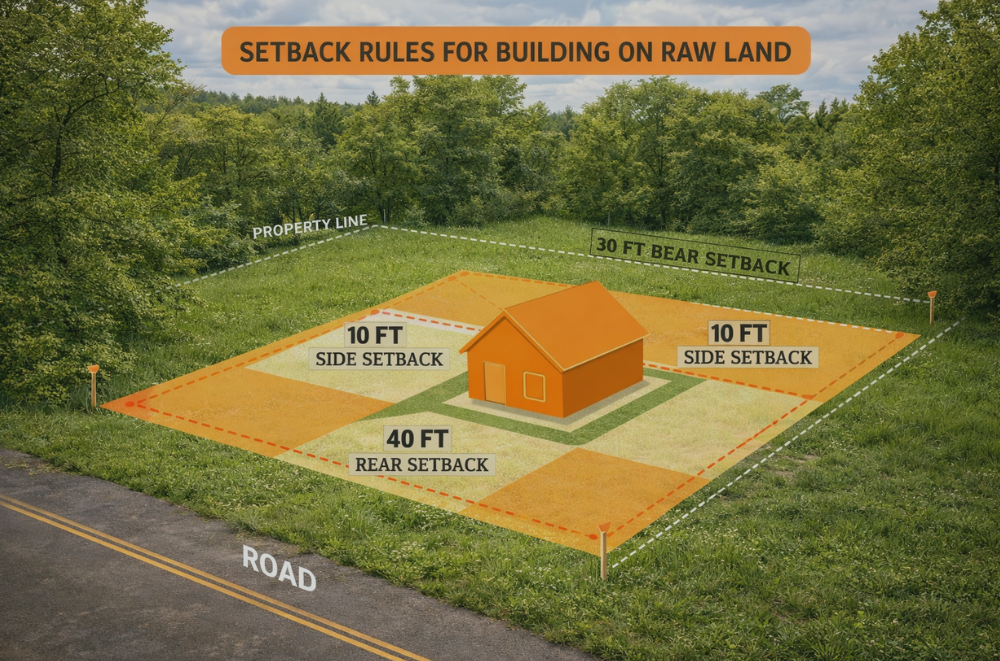
Setbacks are the required distances between your structures and the property lines, roads, or other features like streams.
On paper, a property might look like it has plenty of space—but once setbacks are applied, your usable building area can shrink quickly.
This becomes especially important if you’re planning multiple structures like a home, barn, or shop.
What to check:
Front, side, and rear setback requirements
Additional setbacks for wells, septic systems, or waterways
How much buildable space remains after applying them
How to check:
Setback requirements are typically outlined in your local zoning ordinance. You can usually find them on your township or county website, or by contacting the zoning office directly—especially if you have a specific property in mind.
It’s a small detail that can have a big impact on your layout.
3. Utilities (or Lack of Them)
Images are for illustrative purposes only and may not reflect actual property conditions or requirements.
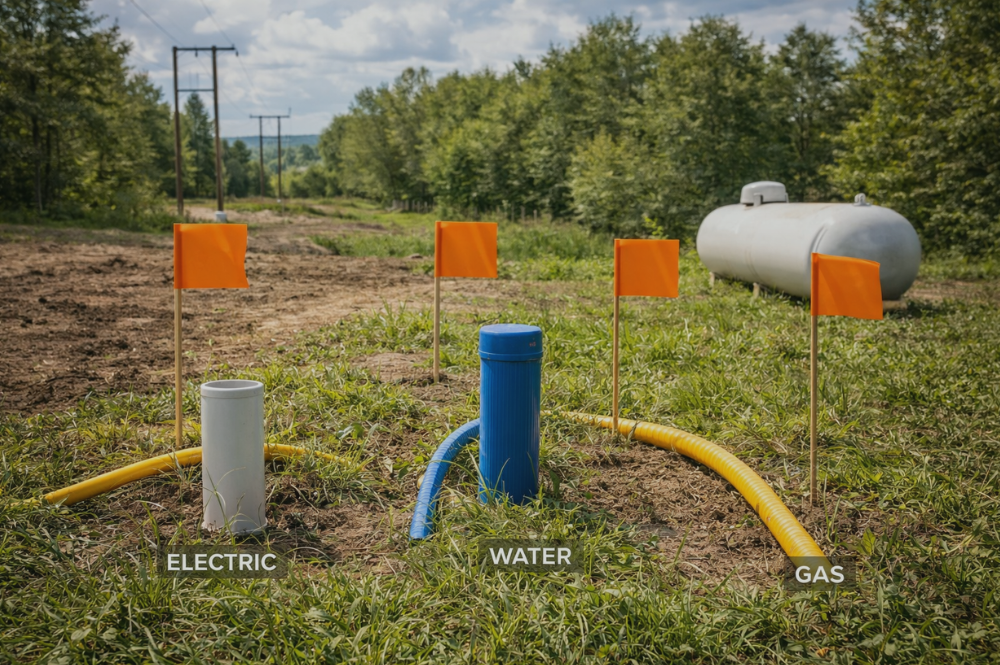
Utilities are one of the biggest differences between raw land and a build-ready property.
Some properties have power, water, and internet readily available. Others require you to bring everything in from scratch—which can add significant cost and complexity.
It’s also easy to forget about things like internet access until you actually need it.
What to check:
Is electric already available at the road or on the property?
Will you need a well for water?
What are your internet options (if any)?
Are there existing utility hookups?
How to check:
Utility availability can vary widely by location. Local utility providers can confirm electric and service access, while your township or neighbors nearby can often give insight into internet and water options.
This is one of the biggest cost variables in building on land.
4. Soil & Perc Testing
Images are for illustrative purposes only and may not reflect actual property conditions or requirements.
This is one of the most important—and most overlooked—factors.
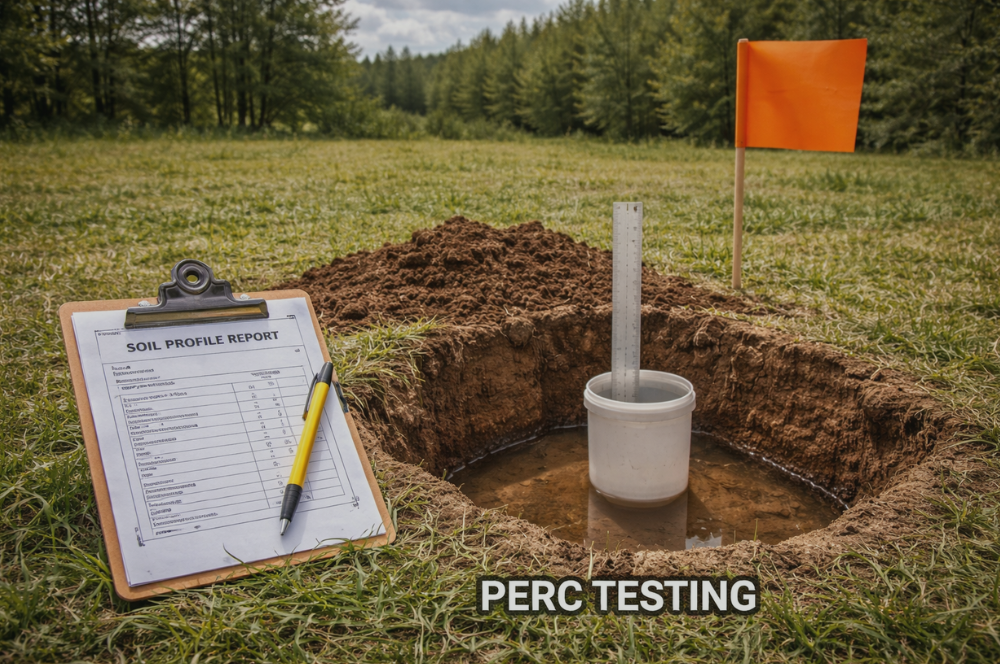
A perc (percolation) test determines how well the soil drains. This directly affects whether you can install a septic system.
In many rural areas, septic is your only option for wastewater. If the soil doesn’t drain properly, you may need an engineered system… or in some cases, the land may not be suitable for building at all.
What to check:
Has a perc test already been completed?
Can you perform one before purchasing?
What type of septic system would be required?
How to check this:
This typically requires working with your local health department or a licensed soil tester, and in many cases, it can be done before purchasing the property.
This is one of those things that doesn’t show up in photos—but can completely change the viability of a property.
5. Well Permits & Water Access
If the property doesn’t have access to public water, you’ll likely need to drill a well.
That process varies depending on location—some areas require permits, have depth limitations, or involve higher drilling costs based on terrain and groundwater availability.
Water is obviously essential, but the logistics behind it can vary more than most people expect.
What to check:
Whether wells are permitted in the area
Typical well depth and cost locally
Any known water availability issues
6. Septic Rules
Septic systems come with their own set of rules and requirements.
Local regulations often dictate the type of system allowed, how it must be installed, and how far it needs to be from wells, property lines, and structures.
Even if the soil passes a perc test, there may still be limitations on placement and design.
What to check:
Approved septic system types in your area
Required distances from other features
Any inspection or permitting requirements
7. Easements
Easements are one of the most overlooked parts of buying land.
An easement means someone else has a legal right to use a portion of your property. This could be for utilities, access roads, or neighboring landowners.
It doesn’t always impact your plans—but depending on where it’s located, it can affect where you’re able to build.
What to check:
Any recorded easements on the property
Where they are located
Whether they impact your intended building areas
8. Road Access
Not all land is as accessible as it looks.
Some properties are landlocked, meaning they don’t have legal access to a public road. Others rely on shared or private roads that come with maintenance agreements.
Even when access exists, building a driveway—especially on raw land—can be a project in itself.
What to check:
Legal (deeded) road access
Who maintains the road
What’s required to build a driveway
Access is one of those foundational pieces that everything else depends on.
9. Subdivision Rules
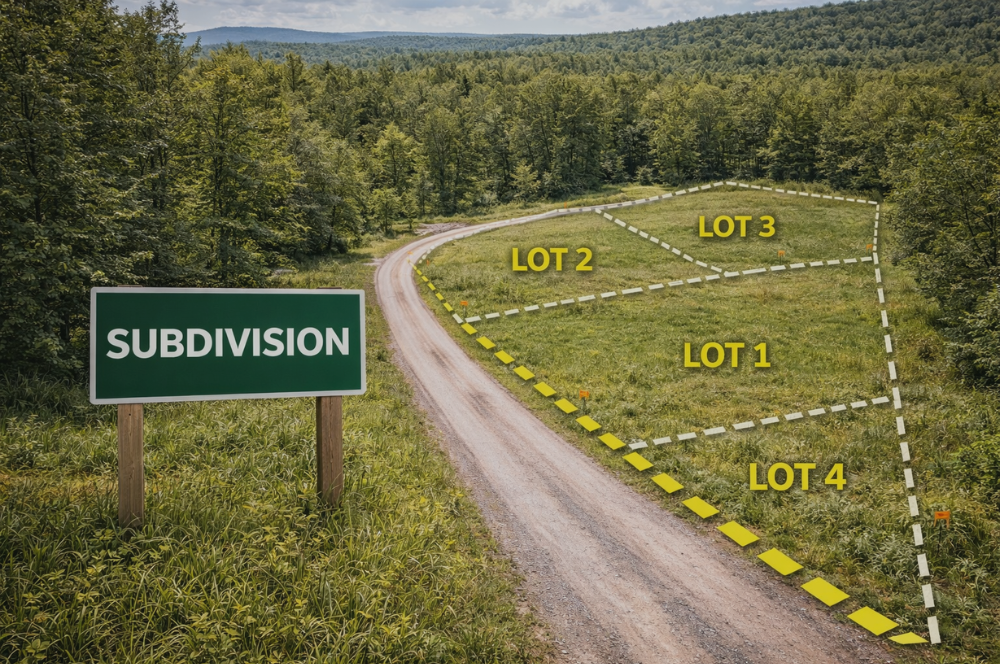
Images are for illustrative purposes only and may not reflect actual property conditions or requirements.
Even if subdivision isn’t part of your current plan, it’s still something worth understanding—because it can impact what you’re allowed to do with the property.
Subdivision is the process of legally dividing a piece of land into two or more separate parcels.
One thing we didn’t realize at first is that you can’t just “split” land however you want. There’s a formal process involved, and it usually starts with a survey.
A licensed surveyor has to come out, measure the property, and create a new parcel map showing how the land will be divided. That alone can be a cost to factor in before anything is even approved.
From there, local zoning regulations come into play.
Most areas have minimum lot size requirements, which means each new parcel has to be a certain number of acres. For example, if the minimum lot size is 2 acres, you can’t divide a 3-acre property into two separate lots.
But something else we’ve learned is that subdivision isn’t always about wanting to divide the land—it can sometimes be required depending on the situation.
In some cases, zoning rules limit how many residential dwellings (your home) or accessory buildings (like garages, barns, or shops) are allowed on a single parcel.
Because of that, if land is being shared, gifted, or split between people, it may need to be officially subdivided before certain types of building are even allowed.
That was something we didn’t fully understand at the beginning—but it’s an important detail that can affect your timeline and planning.
There may also be additional requirements, like:
Road access for each new parcel
Setback compliance on newly created lots
Approval from the township or county
What to check:
Minimum lot size for your zoning classification
Whether subdivision is permitted at all
Estimated cost of a survey in your area
Any approval process required by the township or county
How to check:
Subdivision rules are set at the township or county level and are usually outlined in local ordinances. Speaking directly with the zoning office or a local surveyor can help you understand what’s possible for a specific property.
Subdivision isn’t always about changing your plans—it’s about understanding what your options actually are from the start.
If We Could Only Check 3 Things First
If we had to simplify everything in this post down to just a few starting points, this is where we’d begin:
If you’re just getting started and this feels like a lot, these are the three we’d focus on first:
Zoning – What are you actually allowed to do?
Soil / Perc Test – Can you even build and install septic?
Utilities – What will it take to make the land livable?
Those three alone can tell you a lot about whether a property fits your plans.
Final Thoughts
Buying land feels like the first step toward freedom—and in a lot of ways, it is.
But the research you do upfront is what actually gives you options.
We’re still learning as we go, but if there’s one thing we’ve realized, it’s this:
You don’t just buy land—you buy everything that comes with it.
And the more you understand that ahead of time, the better decisions you’ll be able to make from the start.
Up Next
Now that we’ve covered what to research before buying or building on land, the next question becomes—how do you actually get land in the first place?
In the next post, we’ll walk through the different ways people buy or access land—from traditional purchases to lesser-known programs and options.
